

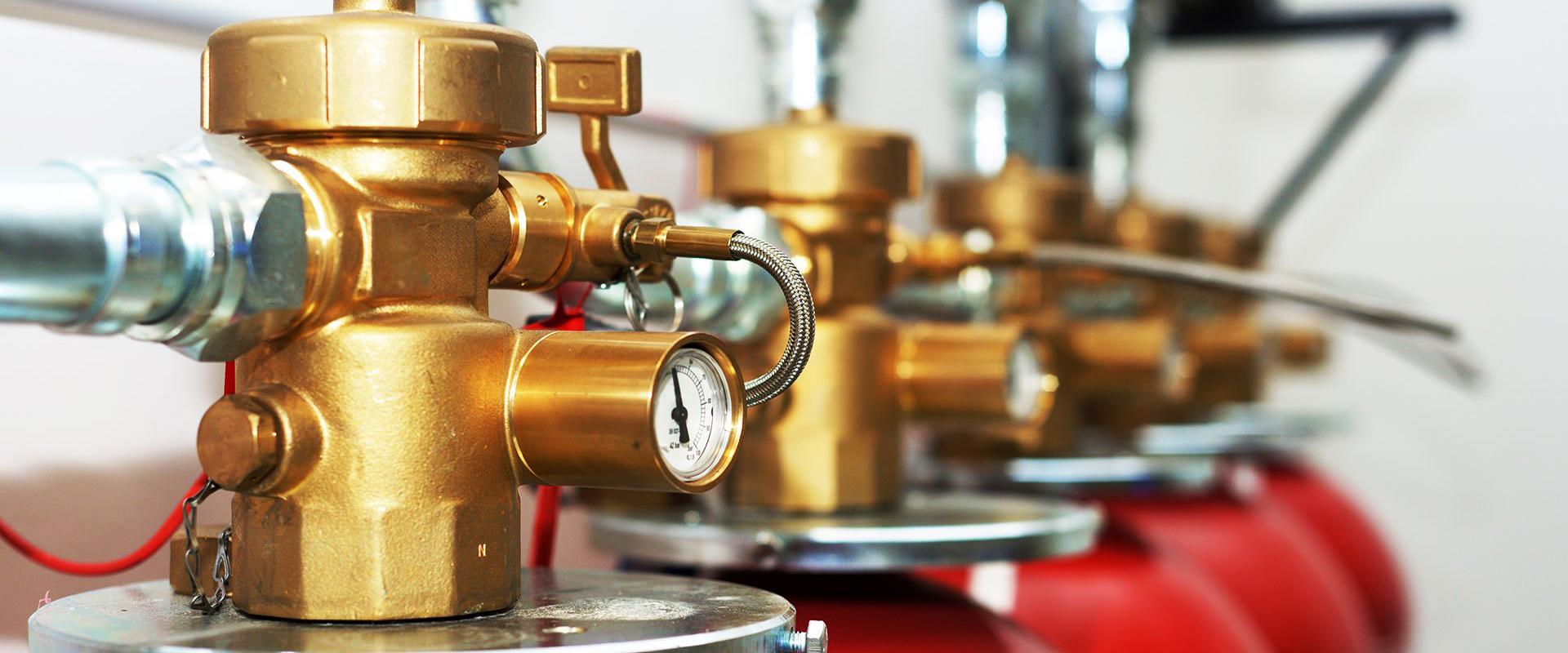
A portable fire extinguisher is serviced by a recognised company once a year, recharged every time it is used, even briefly, and withdrawn after 20 years at the latest. In between, depending on its type, its extinguishing agent is renewed at 5, 10 and 15 years, even if it has never been used. This is what Greek Joint Ministerial Decision 618/43/2005 sets out; the intervals for each type are below.
What the law says
Maintenance, re-inspection and recharging of fire extinguishers are governed by Joint Ministerial Decision 618/43/2005 (Government Gazette B' 52/2005), as amended by 17230/671/2005 (B' 1218/2005) and 140424/2021 (B' 6254/2021). Every installed extinguisher must be re-inspected periodically, and its owner must make sure it is checked and maintained properly.
Servicing, agent renewal, recharging
- Servicing is the yearly check of the extinguisher by the competent person of a recognised company.
- Agent renewal is the replacement of the extinguishing agent in the years the law sets, whether the extinguisher has been used or not.
- Laboratory inspection is the more detailed 10-year check, together with agent renewal.
- Recharging is refilling the extinguisher, after use or when an inspection shows it is needed.
How often: the legal intervals
Table III.1 of the decision, as replaced in 2005, sets the maximum intervals. They run from the date the extinguisher was installed, and no later than one year from its date of manufacture. In the years of agent renewal the extinguisher is also given further servicing, and the 10-year laboratory inspection includes agent renewal too.
| Type | Servicing | Agent renewal | Lab inspection | Service life |
|---|---|---|---|---|
| Foam, water or water-based agent | Every year | At 5 and 15 years | At 10 years | 20 years |
| Dry powder | Every year | At 5 and 15 years | At 10 years | 20 years |
| Dry powder, sealed pressure | Every year | At 15 years | At 10 years | 20 years |
| Carbon dioxide (CO2) | Every year | – | At 10 years | As national or European directives set |
- If servicing shows that the agent can stay in use, following the manufacturer's instructions, the law allows it.
- Sealed-powder extinguishers go back to the manufacturer to be recharged.
- Wet chemical and clean agent extinguishers have no row of their own in the table. Ask us about the schedule for yours.
After use: recharge, even after partial use
The owner must have extinguishers recharged or replaced once they have been fully or partly discharged for any reason. An extinguisher used for a few seconds is not ready for the next fire. Before recharging it is emptied completely, and the old agent is discarded.
CO2 extinguishers
At every yearly service a carbon dioxide extinguisher is weighed. If it has lost more than 10% of its agent by weight, it is recharged or withdrawn. CO2 extinguishers are recharged and laboratory-inspected only by companies certified for high-pressure vessels.
Your own check, every three months
Between services, the law asks the owner for regular checks at intervals of no more than three months, and more often when conditions require. It is a visual check that takes a few minutes:
- the extinguisher is in its place, visible and unobstructed;
- its safety pin and seal are intact;
- the pressure gauge needle, where there is one, is in the green zone;
- the body, hose and nozzle show no dents, rust or cracks;
- the inspection label is there and the date of the next service has not passed.
If anything is wrong, don't wait for the yearly service: call us.
Who may service and recharge
Only a recognised company with an operating licence, whose technical manager is certified by a body accredited by ESYD (the Hellenic Accreditation System) under EN ISO/IEC 17024. The company issues certificates of inspection and recharging and attaches the inspection label to the extinguisher.
Pyrosvesi is a recognised company (approval number PYR– LPR– 410.06.029 – COMP001 – 06 – GRC). Servicing and recharging are carried out by a certified competent person (certificate number PR – C – 133) in our approved workshop in Agios Stefanos.
What the inspection label shows
- That the competent person inspected it.
- The date of the inspection, servicing or recharge (month and year).
- The date of the next procedure (month and year).
- The name and address of the recognised company.
When the agent is renewed, a sticker shows the year in a colour set by its last digit: white for years ending in 0, yellow 1, orange 2, brown 3, green 4, blue 5, purple 6, grey 7, burgundy 8 and black 9.
An "expired" extinguisher
The word is not in the law, but it usually means one of three things: the next-procedure date on the label has passed, the extinguisher is past its service life, or an inspection found it unsafe. The first needs servicing; the other two, replacement. Withdrawn extinguishers are sent for destruction by the recognised company.
Businesses and the logbook
A business with a fire protection certificate keeps a logbook of the maintenance and good working order of its fire protection equipment. For the certificate, the recognised company makes a sworn statement about the extinguishers it supplied, serviced or recharged. More in the guide Fire safety for shops.
Your car's extinguisher
It is a portable extinguisher too, and is checked the same way. Ministerial Decision 50292/3549/2009 requires every passenger car to carry one "Type 1" dry powder extinguisher, for fire categories A, B, C and electrical current up to 1000 V, with a minimum rating of 8A, 34B, C.
Leave it to us
We collect the extinguishers from your premises, inspect, service or recharge them in our workshop, and return them with certificates of inspection and good working order. See fire extinguisher recharging and maintenance, or call us on +30 210 81 00 613.
Sources (in Greek)
- Joint Ministerial Decision 618/43/2005, Gazette B' 52/2005: Annex II (owner, recharging, label, service life).
- Joint Ministerial Decision 17230/671/2005, Gazette B' 1218/2005: Table III.1, the three-monthly check, the year colours.
- Joint Ministerial Decision 140424/2021, Gazette B' 6254/2021.
- Ministerial Decision 50292/3549/2009, Gazette B' 272/2009: the car extinguisher.